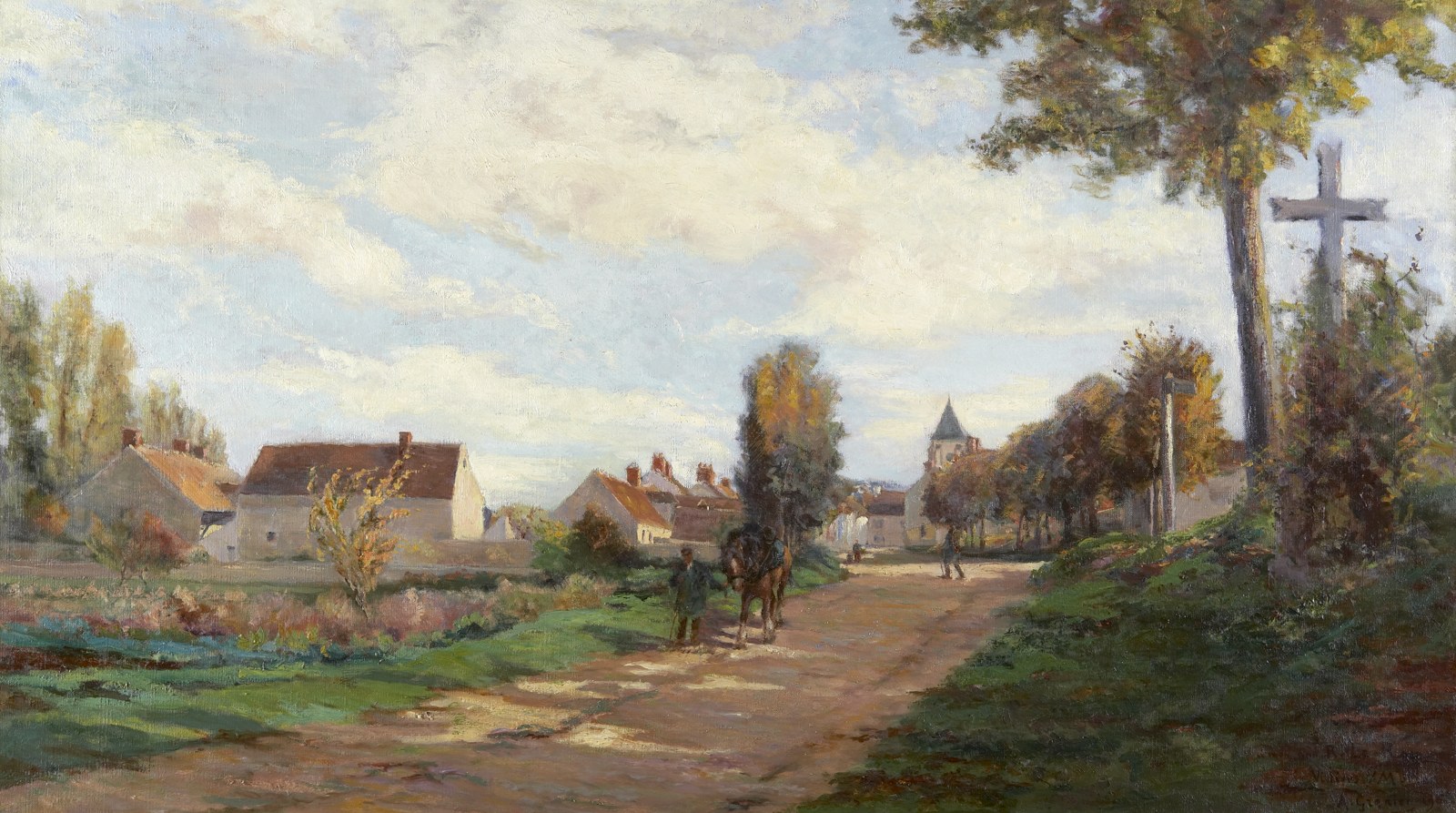
Stop 5 / 7 · Rue du Touarte
In 1928, three Japanese painters - Yuzō Saeki, Takanori Oguiss and Yamaguchi Takeo - stayed in Villiers-sur-Morin. In twenty days, Saeki produced some thirty Expressionist works: a little-known chapter of the School of Paris.
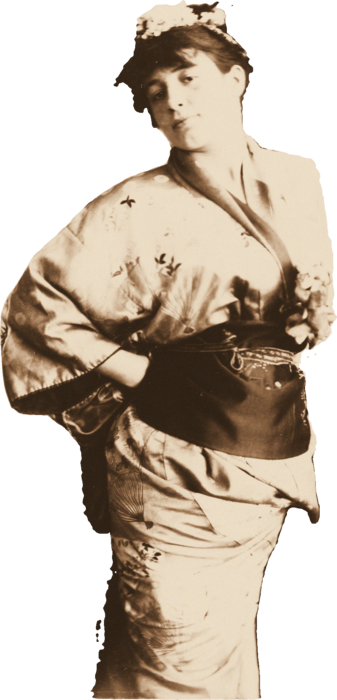
In front of the panel of this stop, scan the QR code: the painting reappears in the landscape. The experience needs the panel, it cannot be launched remotely.
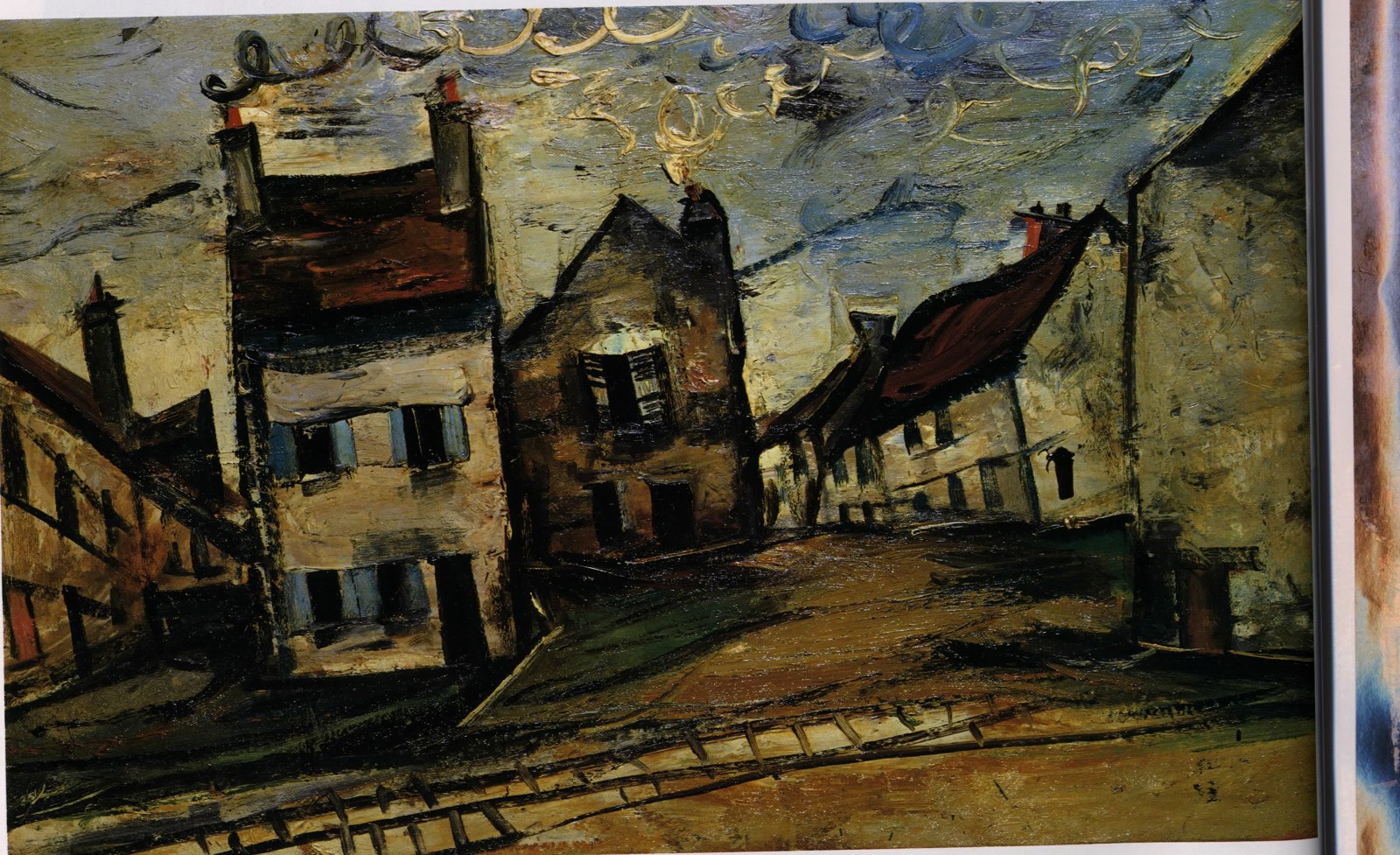
Main work
Yuzō Saeki (1898-1928) · 1928 · Oil on canvas · 58 × 98 cm
In the very title echoes a vanished world, the one Hugo immortalised in Notre-Dame de Paris: a tangle of wretched alleys where a humanity on the margins was crammed together. Saeki paints here not the historical court but its modern counterpart, an urban corner where poverty lingers on in the Villiers-sur-Morin of the interwar years. The composition adopts a plunging perspective that presses the viewer down onto the scene: from a raised viewpoint, the eye tumbles towards a narrow courtyard where flat-bottomed boats are lined up, relics of a river activity the village has swallowed up. The dilapidated façades rise on either side, compact masses pierced by black windows that gape like cavities in a disfigured face. In the centre, a door painted a violent red cuts through the dirty ochres and grimy greys of the walls. This red is not the luminous red of the tiled roofs crowning the buildings; it is a dark, almost sanguine red that functions less as a note of colour than as a wound in the built fabric. The boats in the foreground, rendered in broad flat areas of browns, ochres and blacks, do not so much float as rot where they lie, abandoned in stagnant water whose bluish reflections suggest oblivion rather than life.
The handling reveals a pictorial violence at the opposite pole from the French landscape tradition that Serrier or Grenier carried on. Saeki applies colour in thick, almost brutal impasto that becomes one with the canvas to the point of creating a rough, tactile materiality. The knife has scraped, spread and layered the paint with no concern for finish: the walls keep the trace of these rapid gestures, the roofs pile up strata of red-orange that vibrate by contrast with the deep blacks of the openings. The brushwork seeks neither the fluidity of watercolour nor the tonal accuracy of academic oil painting; it asserts its raw presence, its almost aggressive materiality. This manner recalls German Expressionism or French Fauvism, but Saeki adds something of his own: a disquiet, a tension that turns the motif into an almost hallucinatory vision. The windows are not merely dark, they are black with an absolute black that absorbs the gaze and refuses all depth. The walls are not merely dirty, they bear the marks of a decay that seems to advance before one’s very eyes. The plunging perspective heightens this impression of collapse: everything seems to tip downwards, towards that still water where the boats are rotting away.
The title chosen by Saeki is not anecdotal. “The Court of Miracles” here designates a very real locality in Villiers-sur-Morin, tucked behind the church at the start of the rue du Touarte: a group of modest houses gathered around a shared courtyard, still visible today in their original state. But the name carries within it the memory of Hugo’s Paris, those lawless zones where beggars and outcasts escaped royal authority. In choosing this motif, Saeki reveals what the picturesque gaze of the Brie landscape painters had concealed: rural poverty also exists in these villages that are usually painted in their bucolic finery. The Japanese painter, who arrived in Paris in early 1924, looks at the territory with a gaze stripped of all complacency. Where Serrier or Grenier celebrated bridges, washhouses and paths lined with calvaries, he chooses to paint the margins, the architecture of destitution. This courtyard is not a picturesque motif but a symptom: that of a rural world which also has its shadows. The abandoned boats bear witness to a bygone activity, a world of river labour that modernisation has made obsolete. The red door, the only element of bright colour, signals no promise; rather, it marks the impossible escape, the threshold to an elsewhere that does not exist.
Born in Japan in 1898 and trained in Tokyo before moving to Paris, where he studied at the Académie de la Grande Chaumière, Yuzō Saeki embodies that generation of Japanese artists fascinated by Western painting. But unlike the Japanese painters of the 19th century who adopted the Impressionist codes, Saeki arrived in a post-war Paris where Expressionism and Fauvism had already shifted what was at stake in painting. He painted with an urgency, a violence that has nothing Japanese in its handling but that perhaps conveys, in its very intensity, the experience of uprooting. Having come to Villiers-sur-Morin in February 1928, for a single stay lasting until early March, he painted views of the village there but never sought to reproduce the pastoral gentleness of the Brie landscape painters. His fragile health, for he suffered from tuberculosis, gives his output a tragic dimension. He died in 1928 at the age of thirty, leaving a brief body of work of staggering intensity.
The Court of Miracles (La cour des miracles) condenses what is irremediably dark in urban modernity. What Saeki shows us is not poverty as a subject for compassion but as a plastic reality: the dirty walls, the dead windows, the rotting boats compose a pictorial matter in which the violence of the handling answers the violence of the motif. This work belongs neither to social documentary nor to political denunciation; it affirms that certain forms of existence carry within them a truth that can only be expressed through the very brutality of paint. Saeki died a few months after completing this canvas. What is left to paint when the landscape itself becomes an inhabited ruin?
Marie Gawlikowski & Grégory Mazet, Galerie de Crécy
More about the work Yuzō Saeki The Japanese painters - the West in the mirror of the East
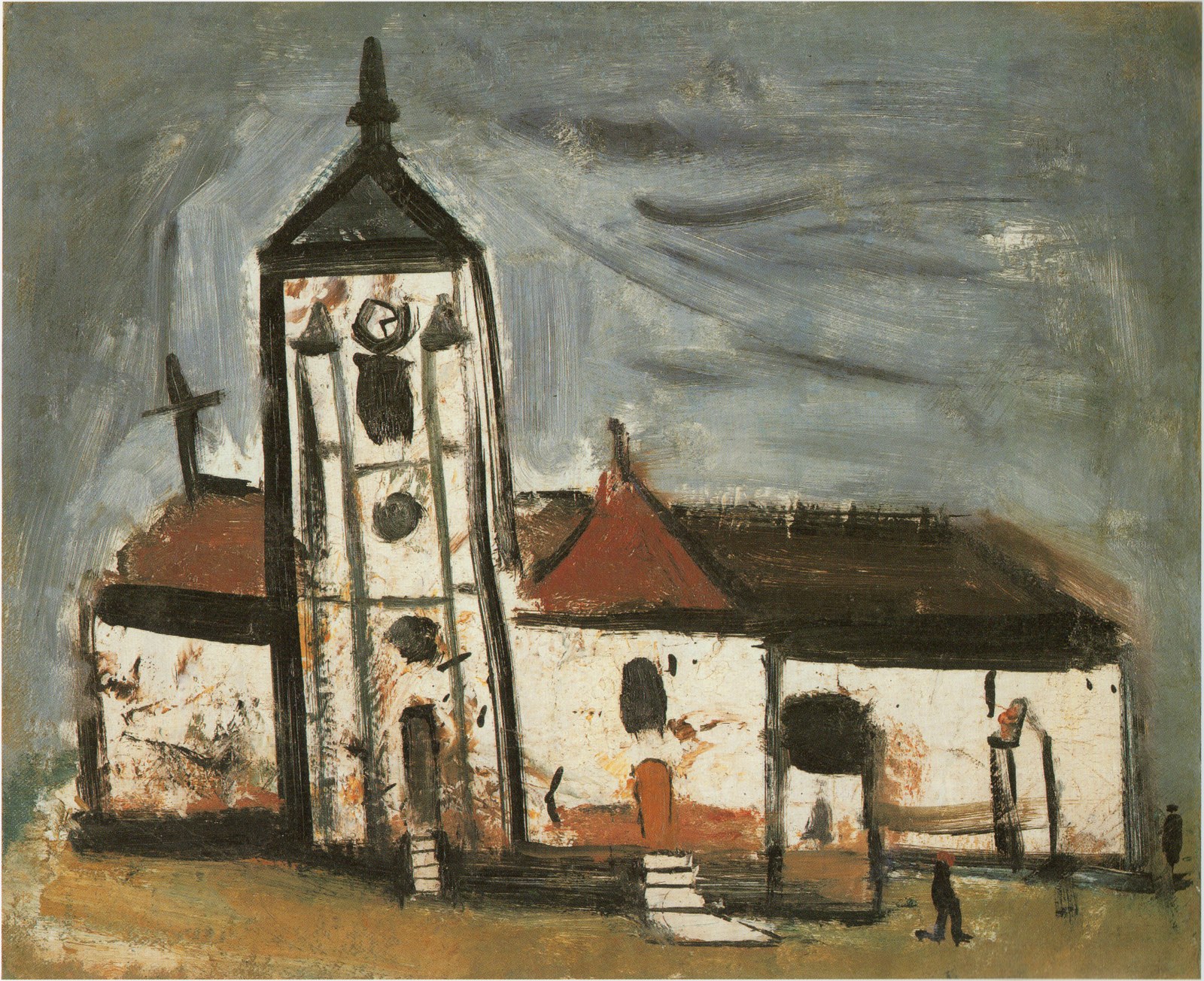 ← Stop 4The Cercle artistique Stop 6 →Rue de Paris