Home Visit Plan your visitThe trailsPractical information Experience The immersive experienceChoose my trailFrequently asked questions Learn The paintersThe worksThe themes Français

Learn

The themes

One note per stop: what was at stake in painting when these works were made, and why it happened here.

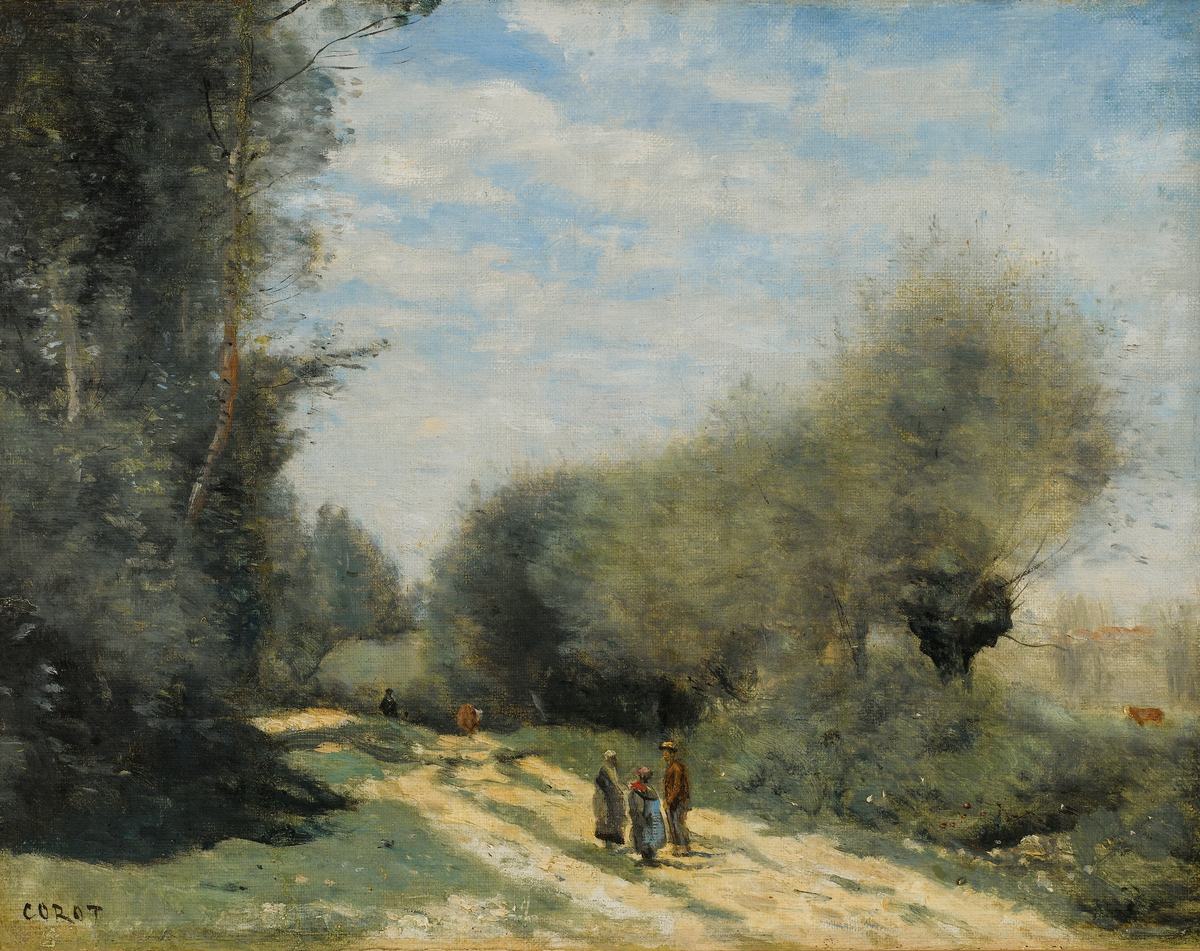
Camille Corot, The Road at Crécy, c. 1870
  1. Stop 1 Villiers-sur-Morin, a forgotten colony Between 1860 and 1928, the Grand Morin valley east of Paris attracted dozens of painters seeking a preserved rural landscape. Villiers-sur-Morin becam…
  2. Stop 2 Before Impressionism - the lesson of the motif Nineteenth-century French painting has long been read through the lens of triumphant Impressionism. Yet the Grand Morin valley reveals an alternative …
  3. Stop 3 Painting outdoors - the emancipation of the easel When Amédée Servin settled in Villiers-sur-Morin around 1860, he brought a conviction: painting must be made before the motif, in the shifting light o…
  4. Stop 4 The Cercle artistique - creating in a rural setting Why do some artistic colonies enter the history books while others remain in the shadows? Barbizon, Pont-Aven and Grez-sur-Loing had a doctrine, leading figures or international archives.…
  5. Stop 5 The Japanese painters - the West in the mirror of the East In February 1928, Yuzō Saeki, Takanori Oguiss and Yamaguchi Takeo came to paint in the Grand Morin valley. Their stay is a reminder that dozens of Japanese painters sought in the…
  6. Stop 6 Impressionism in the Brie - seizing the moment The painters of the Grand Morin valley have a complex relationship with Impressionism: Servin’s realism, Serrier’s visible brushstroke, Anquetin’s Cloisonnism, Saeki’s expressionism. This…
  7. Stop 7 Cloisonnism - the line as the boundary of the visible From 1887 to 1950, one idea runs through the valley of the Deux Morins: the line as the structure of the visible. From the broad outlines of Anquetin’s 1889 Portrait of Lili Grenier to…