Theme of stop 3
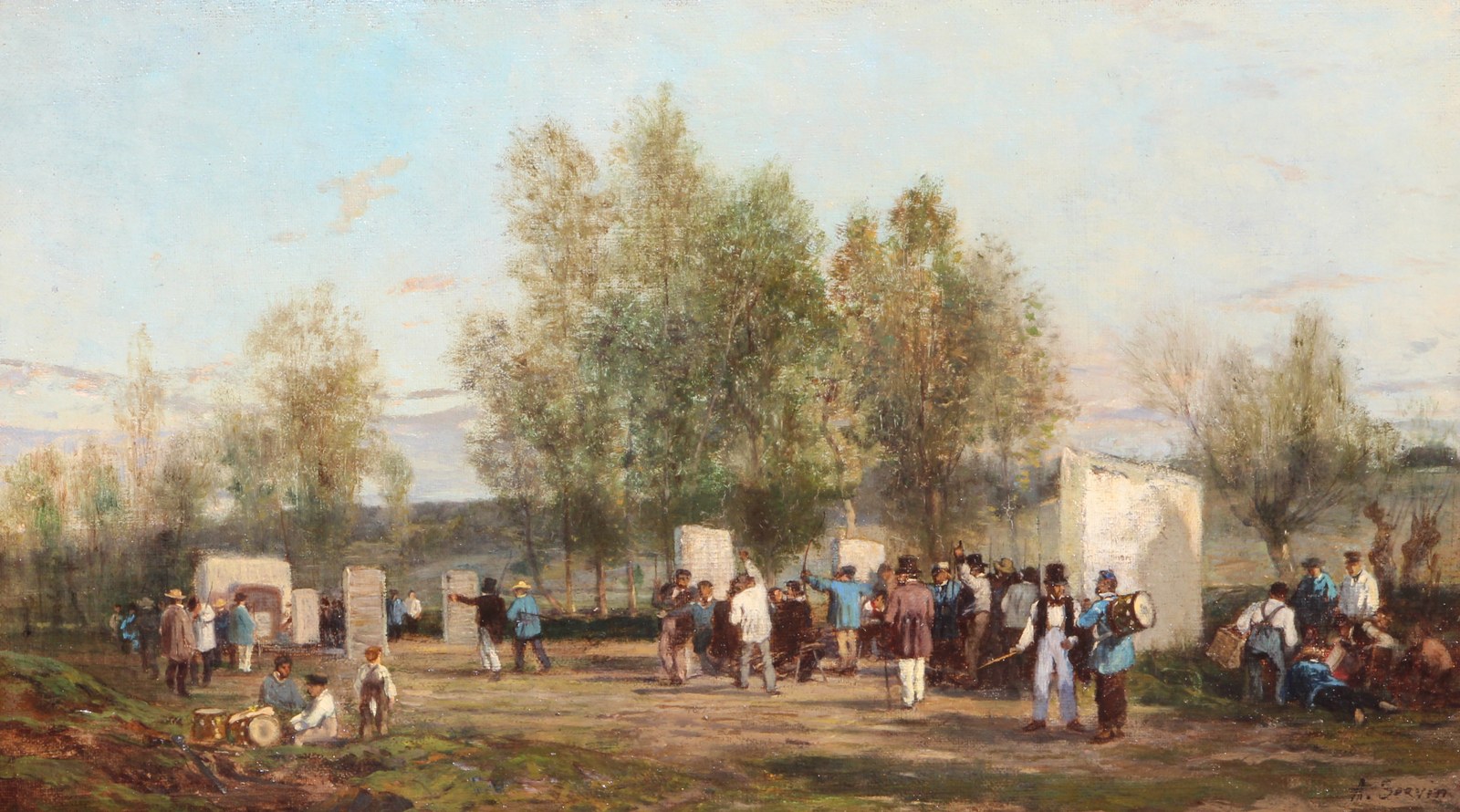
When Amédée Servin settled in Villiers-sur-Morin around 1860, he brought a conviction: painting must be made before the motif, in the shifting light of day. The Grand Morin valley offered something singular, the chance to paint at home, in a lived and familiar landscape, turning plein-air practice into a way of inhabiting the land.
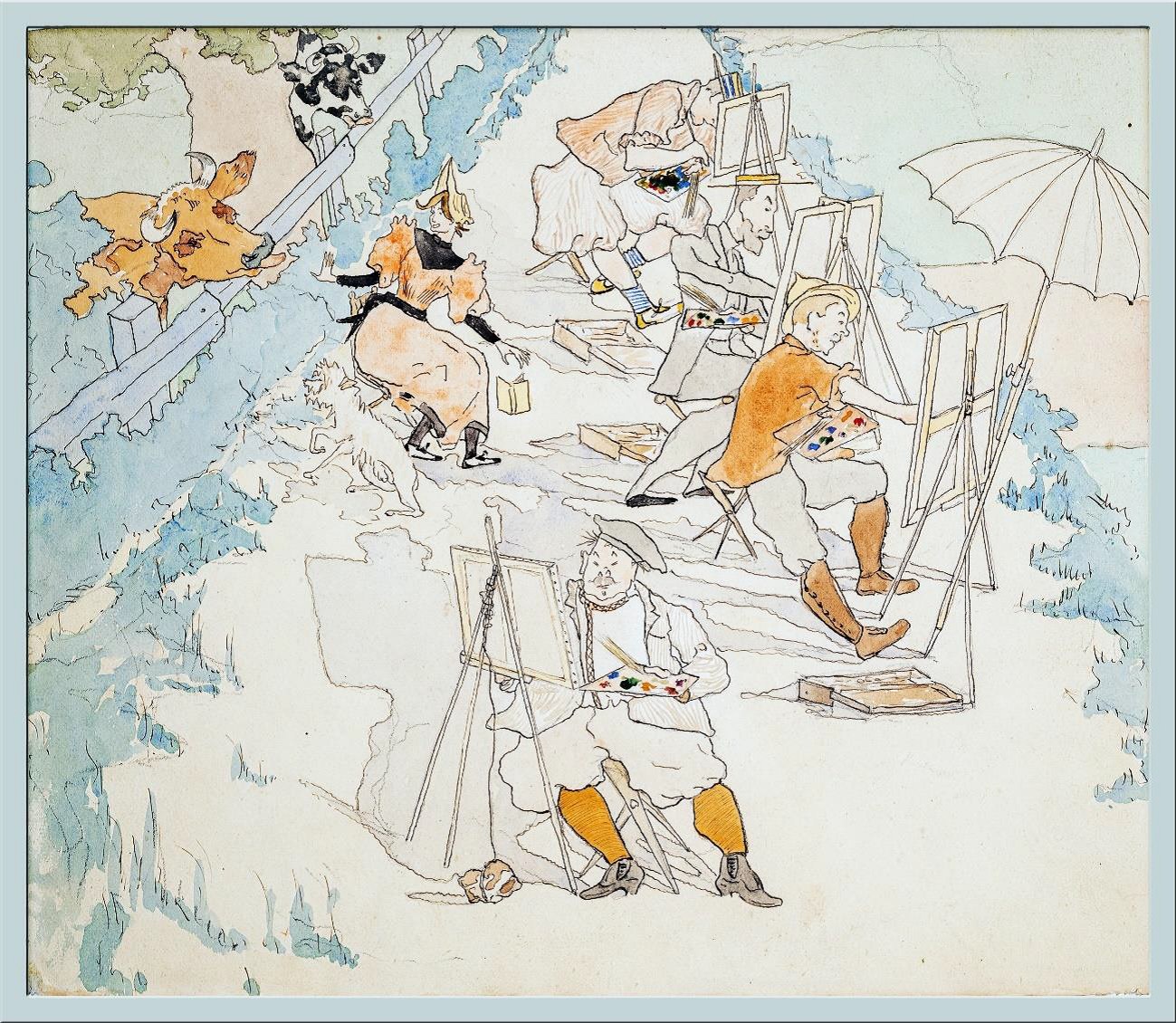
François Gauzi, Plein-Air Painting Session
When Amédée Servin settled in Villiers-sur-Morin in the early 1860s, he brought a conviction with him: painting must be done before the motif, in the changing light of day. This practice, known as plein air, was not new; Corot had experimented with it as early as the 1820s, and the Barbizon painters had made it their method.
But the Grand Morin valley offered something specific: the possibility of painting at home, in a territory that was inhabited, walked and familiar. The motif was no longer a place one travelled to, but a place one lived in.
The invention of the collapsible paint tube by John G. Rand in 1841 had made it possible to carry colours about. But technique alone was not enough: artists also had to want to go outside, to find in the real landscape that contingency, the accident of a passing cloud, the fading light, which a landscape composed in the studio could never give them.