Theme of stop 2
Nineteenth-century French painting has long been read through the lens of triumphant Impressionism. Yet the Grand Morin valley reveals an alternative lineage, linking Corot to the Brie painters through Barbizon and Théodule Ribot, a tradition of patient observation and tonal accuracy that Amédée Servin passed on to Villiers.
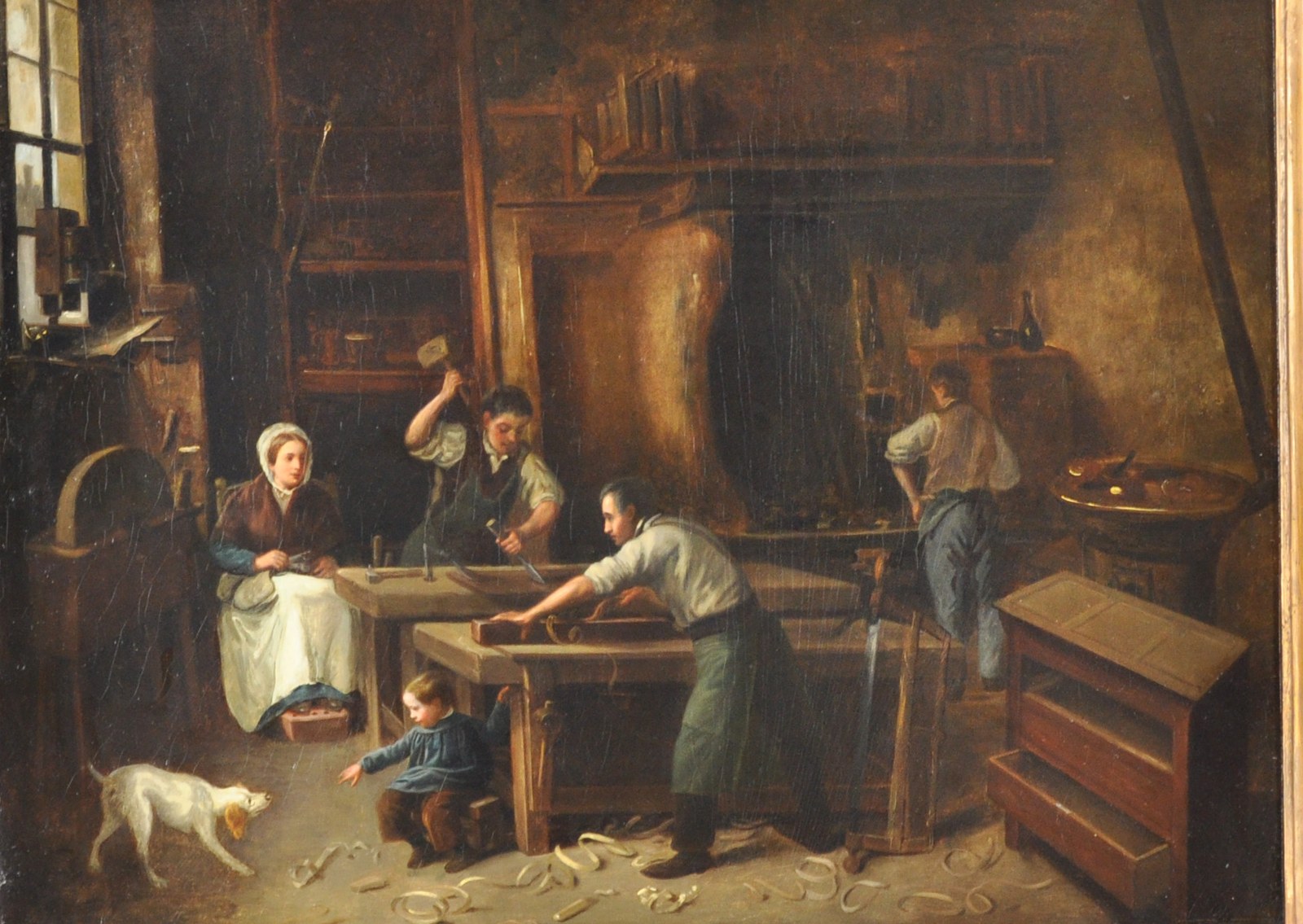
Amédée Servin, The Carpenter's Workshop
The French historiography of 19th-century painting has long been written from the standpoint of triumphant Impressionism, reducing everything produced before 1874 to the status of “precursor” and everything after 1886 to that of “epigone”. This teleology conceals the existence of alternative lineages, living traditions that run through the century without ever embracing the Impressionist revolution.
The Grand Morin valley offers a privileged vantage point from which to observe one of these little-known continuities: the one that links Camille Corot (1796-1875) to the Brie painters of the late 19th and early 20th centuries, by way of Barbizon and Théodule Ribot.
As early as the 1820s, Corot laid down the principles of a landscape painting founded on direct observation of the motif, on tonal accuracy and on “good light”: not the glare of full Mediterranean sun, but the tempered, silvery clarity of the skies of the Île-de-France. It is this legacy that Servin passed on to Villiers.