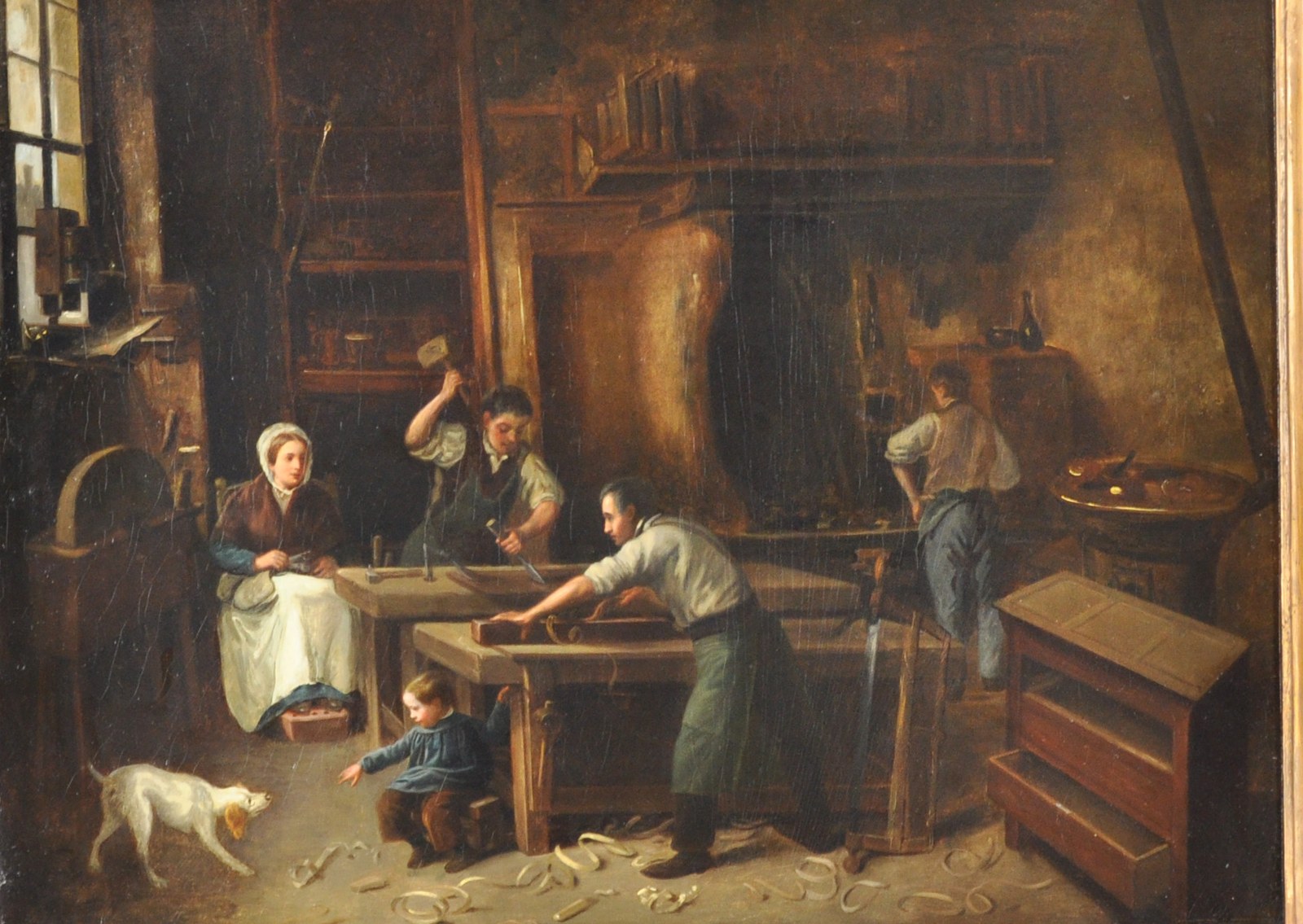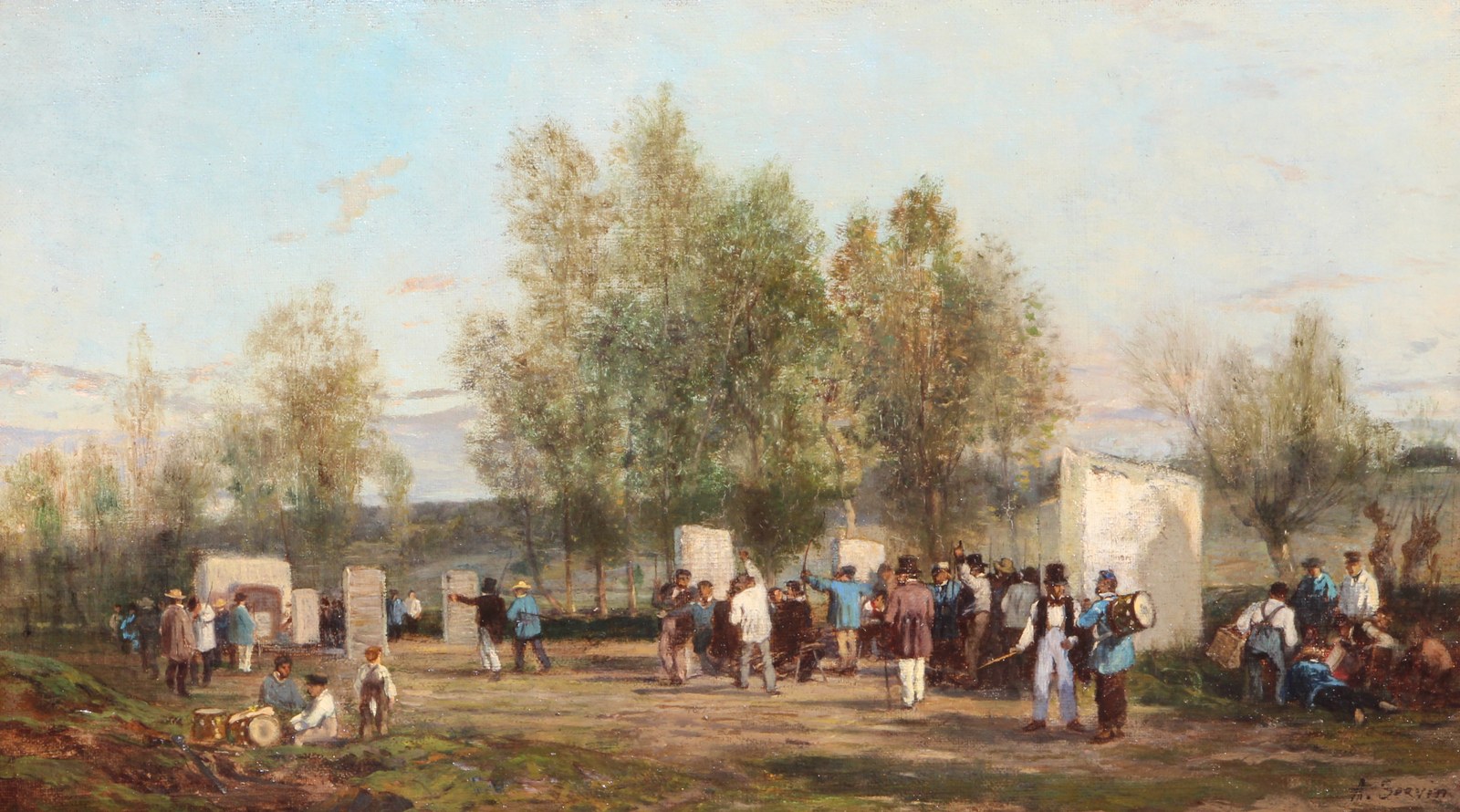
Born in Paris on 14 November 1829, Amédée Servin trained in the studios of Michel-Martin Drolling and then François-Édouard Picot, two masters of the French academic tradition who passed on to him, along with rigour in drawing, the conviction that painting is not an exercise in style but a discipline of truth. At the Salon, where he exhibited from 1857, he won a first medal in 1861, then the gold medal in 1867: a consecration that led to his work being purchased by the State and entering the public collections.
But it is that same year, 1857, that matters more for the history of the territory: Servin discovered Villiers-sur-Morin, a Brie village that nothing yet distinguished from a hundred other villages on the plain, except for that particular light the Grand Morin lays upon things, an ashen, diffuse light, without any violent brilliance, which imposes on the eye a slowness and an attentiveness that plein-air painting was precisely seeking to capture. He returned, set up his studio there, and little by little gathered around him a circle of painters, engravers and friends, unknowingly founding one of the first artists’ colonies in the Paris region.
Servin died at Villiers-sur-Morin on 28 January 1884. His friends and admirers raised a monument to him by subscription, bearing a medallion by Falguière and inaugurated on 2 October 1887, the gesture of a territory towards the man who had chosen it, and one that says, better than any notice, the nature of the bond that can unite a painter and a place: not the fascination of the picturesque, but the slow familiarity of one who returns, year after year, to rest his gaze on the same landscape until that landscape becomes a way of seeing the world.
These notes draw on a combination of institutional, documentary and local sources: the artist directory of the Musée d’Orsay; the Centre national des arts plastiques (CNAP); the National Museum of Modern Art, Tokyo (MOMAT); Bénézit, Dictionnaire critique et documentaire des peintres, sculpteurs, dessinateurs et graveurs (Gründ); art market databases (Artprice, Drouot); the catalogues of the Salon des Artistes français and the Salon d’automne; the Satet-Menon collection relating to the painters of the Grand Morin valley; local sources relating to the Vallée des peintres (the commune of Villiers-sur-Morin, Coulommiers Pays de Brie Tourisme); the Museum of Modern Art, New York (Madame Lili Grenier, portrait by Toulouse-Lautrec, 1888); the Nakanoshima Museum of Art, Osaka (work by Yuzō Saeki).